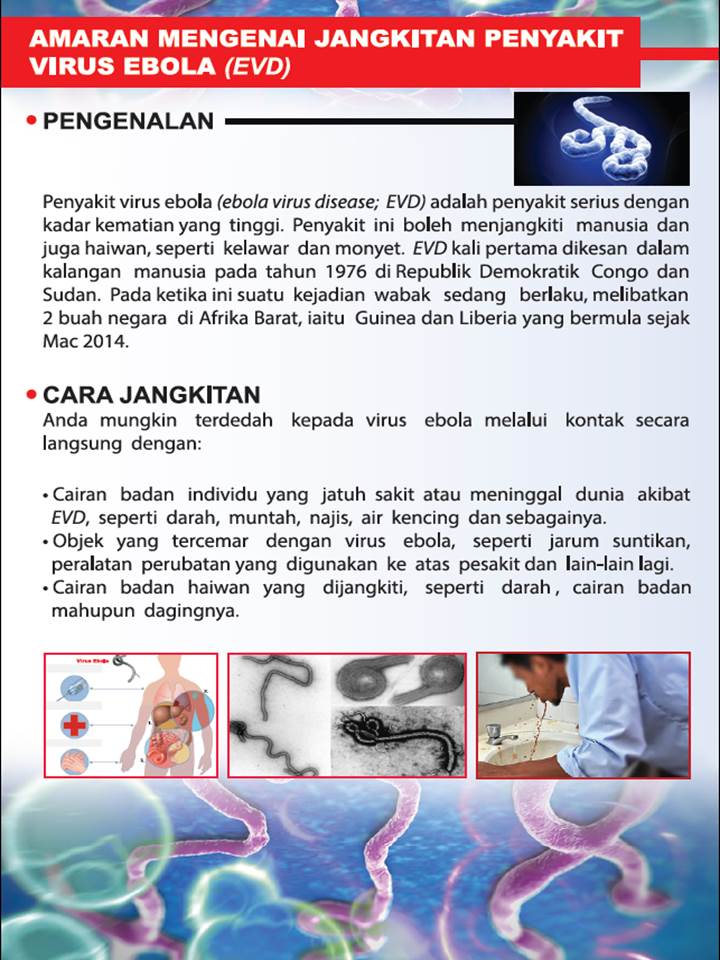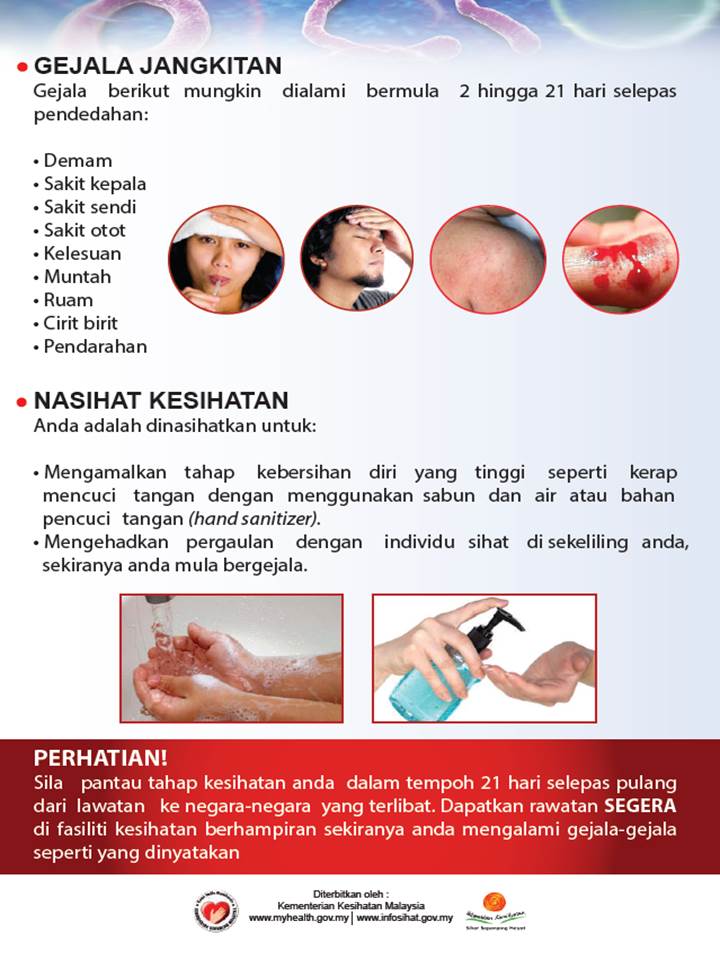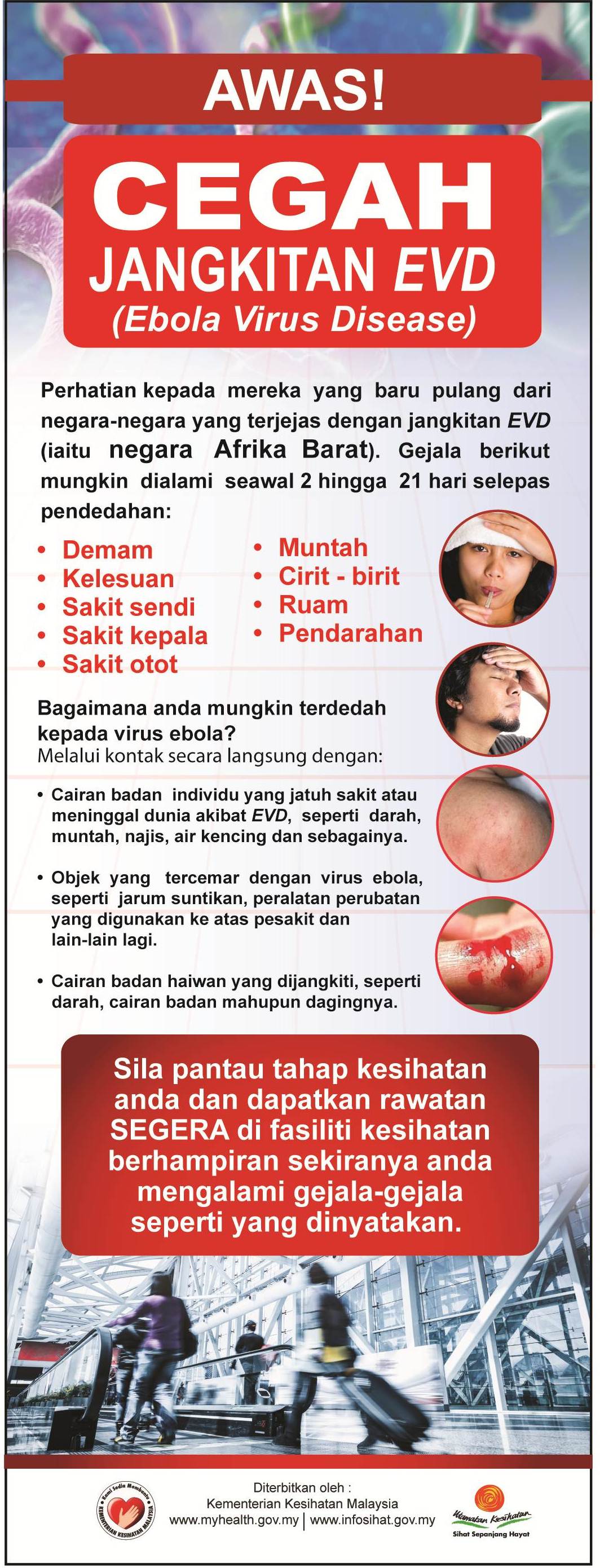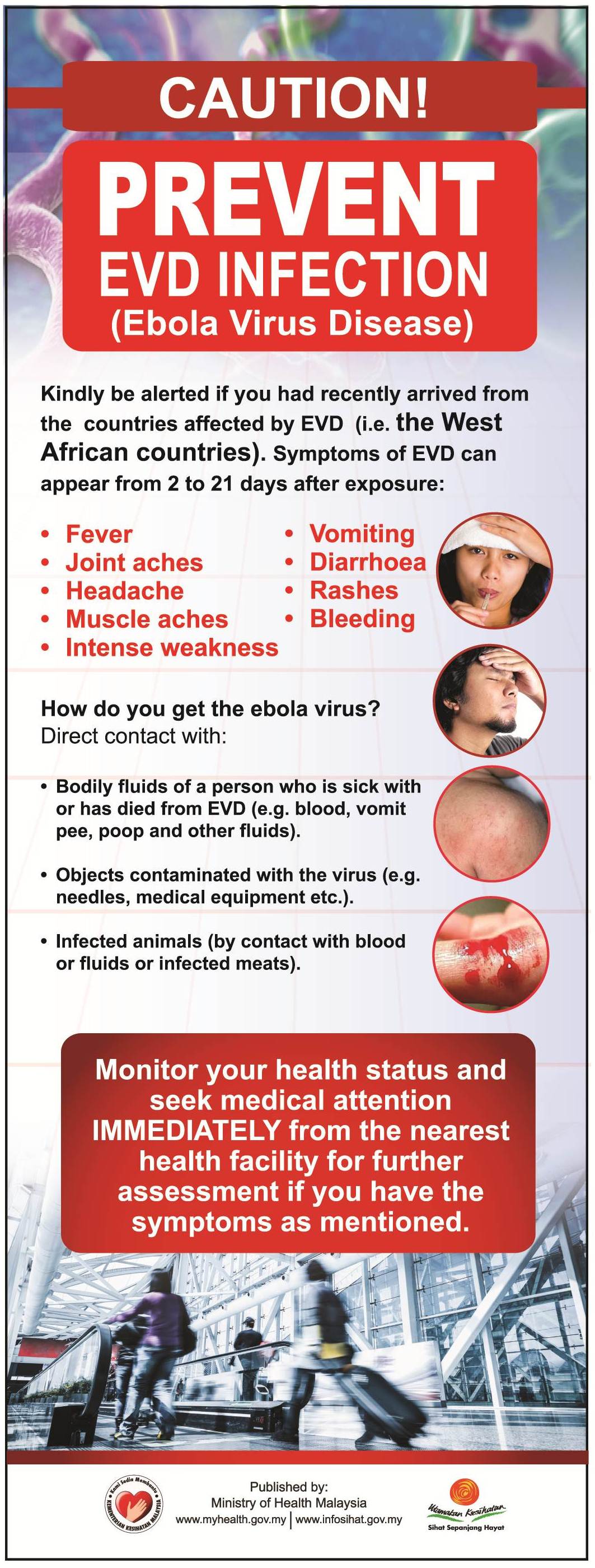



There is no translation available.
Apakah Jerebu?
Jerebu ialah satu fenomena yang disebabkan oleh kewujudan banyak partikel-partikel kecil yang tidak boleh dilihat oleh mata kasar dan terapung-apung di udara. Partikel-partikel ini mungkin berasal secara semula jadi ataupun kesan sampingan daripada aktiviti manusia. Apabila partikel-partikel ini wujud dalam kuantiti yang banyak dan berkelompok ianya boleh menyekat pancaran cahaya matahari ke bumi. Oleh yang demikian keadaan ini mengurangkan jarak pandangan mata kasar.
Punca - Punca Jerebu
Punca utama jerebu adalah akibat daripada :
- Pembakaran Secara Terbuka
- Asap Dari Kilang
- Asap Dari Kenderaan
HINDARI DARIPADA PERBUATAN YANG BOLEH MENYEBABKAN JEREBU.
Indeks Pencemaran Udara (IPU)
IPU diperolehi daripada pengukuran habuk yang halus (10 mikron ke bawah) dan beberapa jenis gas yang boleh menjejaskan kesihatan iaitu karbon monoksida, sulfur dioksida, nitrogen dioksida dan ozon. IPU digunakan sebagai panduan untuk mengetahui kualiti udara dan kesannya terhadap kesihatan seperti berikut :-
| NILAI IPU | STATUS |
|---|---|
| 0 - 50 | Baik |
| 51 - 100 | Sederhana |
| 101 - 200 | Tidak Sihat |
| 201 - 300 | Sangat Tidak Sihat |
| 301 - 500 | Berbahaya |
Anda perlu mengikuti perkembangan semasa melalui media massa (akhbar, televisyen dan radio) untuk mengetahui tahap jerebu semasa di tempat anda supaya dapat mengambil langkah - Iangkah pencegahan.
JEREBU MENGANCAM KESIHATAN ANDA
Keadaan jerebu yang berterusan akan mendatangkan kesan yang buruk kepada semua orang terutama golongan yang berisiko tinggi iaitu :-
- Kanak-kanak
- Orang tua
- Mereka yang mengalami penyakit
- asma
- bronkitis
- radang paru-paru
- penyakit paru-paru yang kronik
- jantung
- alahan
- Perokok
- Mereka yang sentiasa bekerja di luar pejabat atau rumah.
Apakah Tanda dan Gejala Kesan Jerebu Kepada Kesihatan
Kesan-kesan yang akan dialami setelah terdedah secara berterusan kepada jerebu termasuklah:
- Terasa gatal-gatal di bahagian kerongkong dan batuk-batuk.
- Terasa sukar untuk bernafas atau sesak nafas.
- Mata terasa pedih dan berair.
- Hidung berair dan kerap bersin.
- Kulit badan terasa gatal-gatal.
- Terasa sakit dada.
Dapatkan rawatan dan nasihat doktor di klinik berhampiran sekiranya anda mempunyai tanda-tanda dan gejala tersebut.
CEGAHLAH PENYAKIT AKIBAT JEREBU. IKUTI NASIHAT BERIKUT:-
- Mereka yang mengalami penyakit-penyakit seperti batuk, selesema, asma, sakit mata, sakit jantung atau penyakit paru-paru yang kronik hendaklah datang ke klinik dengan segera jika keadaan penyakit bertambah buruk.
- mereka yang di dalam kumpulan berisiko tinggi hendaklah sentiasa mengambil ubat seperti yang dinasihatkan.
- Penutup hidung (nasal mask) hendaklah digunakan oleh semua penunggang motosikal, mereka yang bekerja di luar bangunan atau di tempat-tempat yang berhabuk dan juga mereka yang dalam kumpulan berisiko tinggi.
- Perokok yang mempunyai anak kecil, ibu bapa tua dan sanak saudara yang berpenyakit jangan merokok di dalam rumah.
- Sejauh yang boleh, orang ramai dinasihatkan supaya tinggal di dalam bangunan atau rumah.
- Kurangkan aktiviti sukan di luar rumah
- Orang ramai dinasihatkan supaya sentiasa membasuh muka dan bahagian kulit yang terdedah kepada jerebu dengan air bersih.
- Sekiranya kenderaan anda berhawa dingin, sila gunakannya.
- Orang ramai dinasihatkan supaya sentiasa meminum air yang banyak.
- Perokok dinasihatkan supaya tidak merokok apabila keadaan udara tidak sihat ( iaitu IPU yang melebihi 100 )
- Mereka yang berisiko tinggi dinasihatkan mengambil cuti di luar kawasan yang berjerebu sekiranya keadaan jerebu berterusan pada tahap berbahaya di kawasan mereka.
There is no translation available.
USAGE OF PERSONAL PROTECTION DURING HAZE
Personal Protection
Personal protection is required when going outdoors during a haze. The appropriate protection is a device that prevents the inhaling of airborne particles causing the haze. The various protections commonly used are the surgical face mask and the respirator.
Airborne particles causing haze may be as small as 2.5 microns. The use of the surgical mask will not prevent one from inhaling the small airborne particles. Therefore the recommended protection is the use of the respirator.
Use of Respirators
A respirator is a protective device worn covering the nose and mouth and is used to reduce the wearer’s risk of inhaling hazardous airborne particles. Respirators work better than surgical masks as they seal better and restrict more polluted air from entering the nose and mouth. They also come with the right filter to remove fine particles found in a haze. The N95 respirator may be used as protection during the haze. The respirator filters the small airborne particles and can reduce exposure to the haze. The N95 mask is effective only if used correctly.
The use of N95 masks increases effort in breathing. For some people, the use of N95 mask may cause discomfort breathing, tiredness or headache. This may be due to the mask causing increased resistance to breathing, and a reduction in the volume of air breathed. For most people this is not serious however in precautions must be taken in certain categories of people.
Precautions to Using the Respirator
- Elderly people, people with lung or heart conditions
· People with claustrophobia
· People with lung diseases such as asthma or emphysema
· Women in the later stages of pregnancy
· Children
N95 mask is not suitable for pregnant women and children. Persons with chronic lung or heart conditions who feel uncomfortable when wearing the N95 masks should stop doing so and consult a doctor before carrying on.
Facial hair, like a beard or mustache, can affect the respirator's ability to protect as it comes between the wearer’s face and the respirator's seal. It can also get into the respirator's valves can allow contaminated air to leak into the respirator face piece. Long hair may also get between the respirator seal and wearer’s face allowing contaminated air to leak into the respirator.
Using the Respirator
1. Respirator must be worn correctly for effective protection
2. Respiratory fit testing must be performed to ensure the correct usage of the
respirator.
There is no translation available.
Introduction
Haze is traditionally an atmospheric phenomenon where dust, smoke and other dry particles obscure the clarity of the sky. The World Meteorological Organization manual of codes includes a classification of horizontal obscuration into categories of fog, ice fog, steam fog, mist, haze, smoke, volcanic ash, dust, sand and snow. Sources for haze particles include farming (ploughing in dry weather), traffic, industry, and wildfires.
Haze often occurs when dust and smoke particles accumulate in relatively dry air. When weather conditions block the dispersal of smoke and other pollutants they concentrate and form a usually low-hanging shroud that impairs visibilityand may become a respiratory health threat. Industrial pollution can result in dense haze, which is also known assmog.
For these reasons, sunrise and sunset colors appear subdued on hazy days, and stars may be obscured at night. In some cases, attenuation by haze is so great that, toward sunset, the sun disappears altogether before reaching the horizon.
The main pollutant of concern to health during a smoke haze is the fine particulate matter or PM10 (particulate size of 10 micron and below). The health effect depends on the severity of the smoke haze as described by the PSI (Pollutant Standards Index) reading. At PSI > 100, the air quality is deemed UNHEALTHY.
The air quality in Malaysia is reported as the API or Air Pollutant Index. Four of the index's pollutant components (i.e., carbon monoxide, ozone, nitrogen dioxide and sulfur dioxide) are reported in ppmv but PM10 particulate matter is reported in μg/m3.
Pathophysiology of smoking and respiratory defence mechanism
The innate defense system of the lung includes the apparatus for producing and clearing mucous, the epithelial cell barrier and infiltrating inflammatory immune cells.
Chronic stimulation of this system by the tobacco-smoking habit results in both increased production and decreased clearance of mucous from the airway’s lumen, causing disruption of the tight junctions that form the epithelial barrier and infiltration of the damaged tissue by polymorphonuclear and mononuclear phagocytes as well as natural killer cells and CD4+ and CD8+ T cells and B-cell lymphocytes. The adaptive immune response requires antigen presentation primarily by dendritic cells and the organization of the lymphocytes into follicles with germinal centres.
This type of response is rarely found in healthy non-smokers but has been documented in about 5 percent of peripheral lung units of smokers with normal lung function, increasing to about 20 to 30 percent of airways in the later stages of chronic obstructive pulmonary disease.
Resultant effect of both smokers and haze
The persistent innate and adaptive immune inflammatory response present in the lungs of all long-term smokers appears to be amplified in those smokers who develop severe COPD. Cigarette smoke when inhaled directly or second-hand smoke exposure comprising more than 7,000 chemicals; whereby hundreds of these are hazardous and at least 69 are known to cause cancer, provides an extraordinary strong dose of free radicals to the lung coupled with an exacerbation of a synergistic effect due to the particulate pollutant components (i.e., carbon monoxide, ozone, nitrogen dioxide and sulfur dioxide) from the haze which is rapidly absorbed by cells in the body and produce disease causing cellular changes. This also initiates processes of oxidative injury that involve multiple cell types and the entire lung.
Local inflammation results and markers of inflammation becomes higher, both in smokers and in persons with COPD, than are those in non-smokers. Oxidative stress unfavourably tips the protease-antiprotease balance toward protease, leading to tissue damage and COPD.
The tobacco smoke, which comprises an aerosol (a mixture of solid and liquid particles) and gases, has thousands of chemical components, including many well-characterized toxins and carcinogens (International Agency for Research on Cancer [IARC] 2004). Many of these components are in the gaseous phase and others are components of the particles coupled with the particulate pollutant components (i.e., carbon monoxide, ozone, nitrogen dioxide and sulfur dioxide) from the haze. With this involuntary inhalation resultant effect have the potential to injure the airways and alveoli.
The size of particles in the smoke inhaled directly from a cigarette (mainstream smoke) has been studied and indicates that the mass median aerodynamic diameter of particles is 0.3 to 0.4 micrometers (μm) (Martonen 1992; Bernstein 2004). Particles of this size penetrate to and are deposited in the deep lung. This is eventually coupled with the inhalation of particulate pollutant components which measures the particulate size of 10 micron and below) in the smoky haze.
This resultant effect of exposure both to cigarette smoke and the inhalation of particulate pollutant components from the haze would result in an obstructive ventilatory defect with a decreased FEV1 / FVC; restrictive ventilatory defect resulting in a decreased TLC; abnormal uptake of gas by Hgb across alveolar capillary membrane and disorders with airway dysequilibration (emphysema). The substantial volume of air inhaled daily by an adult which amounts to 10,000 litres per day together with the harmful impurities (arising both from cigarette smoke and haze) results in deterioration of the pulmonary function capabilities of an individual.
A causal conclusion on smoking and deterioration of pulmonary function capabilities with exposure to haze
This infers a causal conclusion of a deterioratory effect between smoking and all major respiratory symptoms among adults, including coughing, phlegm, wheezing, dyspnoea, breathlessness among children of school age, poor asthma control amongst adults and children of school age, and chronic obstructive pulmonary disease, for both active smoking and involuntary exposure to tobacco smoke during haze.
A Serious Notation From The Ministry of Health Malaysia
Stop smoking immediately in haze environments in order to sustain your pulmonary function capabilities healthily.
There is no translation available.
- Pastikan anda menyediakan makanan dengan cara yang selamat, bersih, cukup masak dan bertutup untuk mengelakkan pencemaran dan keracunan makanan.
- Semua Peniaga /penjaja diwajibkan mematuhi tatacara kebersihan diri dengan menggunakan Alat Pelindung Diri yang sesuai seperti penutup mulut, apron, sarung tangan semasa penyediaan dan penghidangan makanan.
- Sediakan pilihan makanan yang pelbagai dan pastikan makanan yang tinggi vitamin, mineral, antioksida serta serat seperti buah- buahan dan sayur – sayuran untuk memenuhi keperluan pelanggan bagi melawan penyakit.
- Kurangkan penggunaan lemak seperti minyak dan santan dalam masakan.Makanan berkuah atau bersup adalah lebih baik berbanding makanan bergoreng.
- Kurangkan penggunaan garam dalam masakan kerana makanan yang masin akan menyebabkan kehausan yang meningkatkan keperluan air badan.
- Peniaga digalakkan untuk menyediakan makanan yang telah siap dibungkus untuk memudahkan pelanggan membawa balik makanan yang dibeli.
- Semua peralatan yang digunakan untuk menghidang makanan seperti bain marie, pinggan, mangkuk dan sebagainya mestilah sentiasa bertutup untuk memastikan makanan tidak terdedah kepada jerebu atau pencemaran lain.
- Peniaga yang berada di luar bangunan dan terdedah kepada cuaca berjerebu hendaklah memastikan diri mereka dan pekerja memakai penutup mulut dan minum banyak air untuk mengelakkan dehidrasi dan mengelakkan pendedahan kepada jerebu yang berpanjangan.
- Semua Peniaga/Penjaja serta pekerja dan pembeli makanan atau pelanggan adalah dilarang merokok untuk memastikan indeks pencemaran udara di sekeliling premis makanan tidak bertambah buruk.
There is no translation available.
Pemakanan yang sihat adalah penting semasa musim berjerebu untuk mempertahankan sistem imunisasi badan dan menjauhkan diri kita dari mendapat pelbagai penyakit yang ada kaitan dengan jerebu .
Air adalah satu keperluan bagi setiap individu. Air diperlukan di dalam badan sebagai pelarut makanan, garam mineral dan vitamin. Air juga diperlukan untuk mengawal suhu badan dan melancarkan peredaran darah.Air penting untuk meningkatkan kadar metabolisma tubuh dan kadar pembakaran lemak .Minum air kosong pada masa tertentu akan membantu meningkatkan kadar metabolisma badan. Semasa musim berjerebu, cuaca sekeliling yang kering dan panas akan meningkatkan keperluan tubuh terhadap cecair. Ini adalah penting untuk menyeimbangi agar suhu badan tidak terus meningkat.
- Tingkatkan pengambilan cecair kepada 6 hingga 8 gelas air atau lebih mengikut keperluan untuk mengelakkan dehidrasi .
- Minum Jus serta makan buah – buahan dan sayur- sayuran yang kaya dengan antioksida, vitamin, mineral dan serat bagi membantu melawan penyakit.
- Elakkan pengambilan minuman yang mengandungi banyak kaffein seperti kopi dan minuman beralkohol yang boleh menyebabkan pembuangan air kencing yang kerap dan boleh menyebabkan dehidrasi.
- Pengambilan air suam adalah digalakkan berbanding minuman sejuk /berais kerana tubuh badan akan kehilangan haba dengan cepat yang perlu diganti semula.
- Kurangkan pengambilan makanan yang menyebabkan kehausan dan dehidrasi seperti makanan masin atau bergaram.
- Makan pelbagai makanan mengikut keperluan untuk memastikan tubuh mendapat kesemua zat makanan yang diperlukan.
- Pastikan semua makanan dan minuman disediakan dalam keadaan bersih ,dimasak dan disimpan dalam keadaan yang sesuai sebelum digunakan untuk mengelakkan keracunan atau pencemaran makanan.
- Kekal aktif di tempat yang sesuai ( Dalam bangunan /rumah) tetapi elakkan atau kurangkan aktiviti di luar rumah. Elakkan merokok kerana ianya akan lebih memburukkan keadaan pencemaran udara.
- Anda digalakkan makan di rumah dan menyediakan sendiri makanan. Jika makan di luar, pilihlah tempat makan yang bertutup atau berada di dalam bangunan. Lebih baik bungkus makanan dan makan di rumah bersama keluarga.
There is no translation available.
Kita perlu kekal aktif untuk mengekalkan kesihatan tubuh badan dan bagi mengelakkan pelbagai penyakit. Kita disarankan berjalan 10 ribu langkah sehari atau melakukan aktiviti fizikal sederhana seperti berjalan laju, berkebun atau berbasikal selama 150 minit seminggu. Pada lazimnya, aktiviti fizikal adalah dilakukan di luar rumah. Keadaan berjerebu sekarang menyebabkan kita menyekat aktiviti luar rumah kerana semua kegiatan luar perlu dielakkan jika Indeks Pencemaran Udara (IPU) melebihi 100 bagi mengelakkan masalah-masalah kesihatan yang berkaitan dengan menyedut dan terdedah kepada udara berjerebu yang tercemar. Ini secara tidak langsung boleh mengurangkan aktiviti fizikal kita. Ia tidak semestinya begitu! Berikut adalah tips bagaimana untuk meningkatkan aktiviti fizikal kita walaupun keadaan berjerebu:
- Kegiatan fizikal dan sukan di dalam bangunan boleh diteruskan seperti menghadiri gimnasium, sukan futsal, skuash dan badminton.
- Gunakan tangga berbanding lif di tempat kerja atau di dalam mana-mana bangunan
- Mop lantai dan kemas rumah anda
- Menari di dalam rumah
- Berjalan sambil membeli belah sekarang sesuai untuk bersiapan awal Hari Raya.
Jangan lupa minum air yang mencukupi iaitu 2 liter sehari dan tidak merokok ketika keadaan berjerebu. Pemasangan penghawa dingin dan alat penapis udara adalah digalakkan. Aktiviti fizikal diluar boleh diteruskan jika IPU kurang daripada 100. Walaubagaimanapun, bagi mereka yang menghidap asma atau sedang mengalami batuk selsema dan irritasi kulit, mereka disarankan supaya mengelakkan diri dari keluar dari rumah dan bangunan sehingga IPU mencapai kurang dari 50. Diharap tips diatas dapat membantu kita untuk kekal aktif dan sihat walaupun dalam keadaan berjerebu
There is no translation available.
Selain daripada warga emas dan kanak-kanak, para penghidap penyakit kronik juga adalah golongan berisiko untuk mengalami kesan buruk akibat terdedah kepada udara yang berjerebu. Jerebu mengandungi partikel yang sangat kecil yang boleh membawa bahan toksik yang dapat masuk ke dalam peparu dan diserap ke dalam darah.1
Penghidap penyakit kronik terutamanya penghidap asma (lelah), penghidap obstruksi persafasan kronik, penghidap penyakit jantung, diabetes (kencing manis) dan darah tinggi perlu mengelakkan diri daripada keluar dari rumah sehinggalah tahap Indeks Pencemaran Udara (IPU) kurang daripada 100.
Kajian menunjukkan terdapat peningkatan serangan asma, peningkatan jangkitan pernafasan, pengurangan fungsi peparu, peningkatan kejadian susah nafas, batuk-batuk dan iritasi mata semasa keadaan berjerebu2. Ada juga bukti yang mengaitkan peningkatan serangan jantung akibat terdedah dengan udara berjerebu.3 Oleh itu adalah penting bagi penghidap penyakit-penyakit kronik yang berkenaan untuk mengelakkan diri daripada terdedah dengan jerebu bagi mengelakkan keadaan kesihatan mereka menjadi lebih teruk. Berikut adalah langkah-langkah berjaga-jaga yang boleh diambil oleh penghidap penyakit kronik:
- Elakkan diri daripada keluar dari rumah dan bangunan jika IPU lebih daripada 100
- Jika perlu keluar daripada rumah, sila pakai pelindung pernafasan. Walaubagaimanapun, penggunaan pelindung pernafasan N95 mungkin boleh menyebabkan ketidakselesaan dan susah nafas bagi sesetengah penghidap asma dan penyakit kardiovaskular.
- Minum air kosong yang cukup, iaitu sekurang-kurangnya 2 liter sehari. Keadaan berjerebu yang kering boleh menyebabkan dehidrasi badan. Jangan ambil air manis kerana ini boleh meningkatkan paras gula dalam darah bagi penghidap diabetes.
- Ambil ubat anda seperti yang disarankan oleh doktor.
- Lakukan senaman di dalam rumah.
- Makan makanan yang seimbang. Kurangkan garam, gula dan lemak. Makan mengikut keperluan aktiviti harian anda. Kurangkan makan jika anda kurang beraktiviti.
- Pastikan anda memberitahu keberadaan anda kepada keluarga atau rakan yang boleh dihubungi dan dapat membantu jika anda mengalami masalah kesihatan.
- Jangan merokok.
- Dapatkan rawatan segera jika anda mengalami gejala seperti sukar bernafas, sakit dada, sakit kepala, mual dan muntah.
- Layari http://moh.gov.my/v/terkini_jerebu untuk mendapatkan maklumat terkini mengenai situasi jerebu di tempat anda
Diharap langkah-langkah diatas dapat membantu para pesakit kronik untuk menghadapi keadaan berjerebu ini.
Rujukan
- The Haze and Health: A Blog About the Fog Kay Leong Khoo, FAMS, MBBS, MMed (Int Med), 2006
- American Thoracic Society. What constitutes and adverse health effect of air pollution? Am J Respir Crit Care Med 2000;161:665-73.
- Bai N, Khazaei M, van Eeden SF, Laher I. The pharmacology of particulate matter air pollution-induced cardiovascular dysfunction. Pharmacol Ther 2006; [Epub ahead of print].
There is no translation available.
Pengenalan
Jerebu boleh menyebabkan masalah kesihatan di kalangan orangramai. Sebagai langkah pencegahan semasa jerebu, orang ramai dinasihatkan supaya meminimakan aktiviti luaran. Walau bagaimananpun, pekerja di sektor perkhidmatan terutamanya anggota seperti hospital, klinik kesihatan, Polis, Bomba, Jabatan Perkhidmatan Awam, dan lain-lain adalah terdedah kepada persekitaran yang kurang sihat semasa jerebu. Sektor pekerja tersebut juga terpaksa meneruskan kerja walaupun situasi persekitaran semakin merosot. Panduan merupakan nasihat kesihatan bagi pekerjaan di sektor perkhidmatan.
Tindakan untuk diambil oleh organisasi
- Mengenal pasti keperluan anggota yang minima untuk melaksanakan tugas semasa keadaan persekitaran tidak sihat.
- Mengenalpasti anggota berisiko tinggi iaitu dengan masalah kesihatan seperti penyakit paru-paru dan penyakit jantung yang tidak boleh melakukan tugas luaran dan memberi mereka tugas dalaman untuk sementara waktu.
- Menyediakan jadual untuk giliran tugas supaya anggota tidak terdedah untuk tempoh masa yang lama.
- Menyediakan alat pelindung diri ( topeng muka) yang mencukupi untuk di gunakan oleh anggota semasa menjalankan tugas. Latihan dan fit testing perlu dilakukan di mana perlu.
- Memberi nasihat kesihatan kepada anggota mengenai langkah-langkah pencegahan untuk diambil semasa melaksanakan tugas semasa jerebu
Tindakan untuk diambil oleh pekerja
- Memastikan kebersihan diri. Mencuci tangan setelah masuk dari luar bangunan.
- Memberitahu status kesihatan kepada majikan jika mempunyai masalah kesihatan seperti penyakit paru-paru dan penyakit jantung.
- Mengambil rawatan seperti dinasihati doktor jika mempunyai masalah kesihatan seperti penyakit paru-paru dan penyakit jantung.
- Menggunakan alat pelindung diri semasa menjalankan tugas di luar.
- Menjaga kesihatan dengan meminum air yang banyak, memakan makan berkhasiat terutamanya buah-buahan.
- Mengelakkan daripada merokok, meminum kopi atau alkohol.
- Melakukan senaman dalaman.
There is no translation available.
{redirect url="https://eqms.doe.gov.my/"}